public

Coronavirus disease 2019

COVID-19 is a contagious disease caused by the coronavirus SARS-CoV-2. In January 2020, the disease spread worldwide, resulting in the COVID-19 pandemic.

The symptoms of COVID‑19 can vary but often include fever,[7] fatigue, cough, breathing difficulties, loss of smell, and loss of taste.[8][9][10] Symptoms may begin one to fourteen days after exposure to the virus. At least a third of people who are infected do not develop noticeable symptoms.[11][12] Of those who develop symptoms noticeable enough to be classified as patients, most (81%) develop mild to moderate symptoms (up to mild pneumonia), while 14% develop severe symptoms (dyspnea, hypoxia, or more than 50% lung involvement on imaging), and 5% develop critical symptoms (respiratory failure, shock, or multiorgan dysfunction).[13] Older people have a higher risk of developing severe symptoms. Some complications result in death. Some people continue to experience a range of effects (long COVID) for months or years after infection, and damage to organs has been observed.[14] Multi-year studies on the long-term effects are ongoing.[15]

COVID‑19 transmission occurs when infectious particles are breathed in or come into contact with the eyes, nose, or mouth. The risk is highest when people are in close proximity, but small airborne particles containing the virus can remain suspended in the air and travel over longer distances, particularly indoors. Transmission can also occur when people touch their eyes, nose, or mouth after touching surfaces or objects that have been contaminated by the virus. People remain contagious for up to 20 days and can spread the virus even if they do not develop symptoms.[16]

Testing methods for COVID-19 to detect the virus’s nucleic acid include real-time reverse transcription polymerase chain reaction (RT‑PCR),[17][18] transcription-mediated amplification,[17][18][19] and reverse transcription loop-mediated isothermal amplification (RT‑LAMP)[17][18] from a nasopharyngeal swab.[20]

Several COVID-19 vaccines have been approved and distributed in various countries, many of which have initiated mass vaccination campaigns. Other preventive measures include physical or social distancing, quarantining, ventilation of indoor spaces, use of face masks or coverings in public, covering coughs and sneezes, hand washing, and keeping unwashed hands away from the face. While drugs have been developed to inhibit the virus, the primary treatment is still symptomatic, managing the disease through supportive care, isolation, and experimental measures.

public

Coronavirus disease 2019

COVID-19 is a contagious disease caused by the coronavirus SARS-CoV-2. In January 2020, the disease spread worldwide, resulting in the COVID-19 pandemic.

The symptoms of COVID‑19 can vary but often include fever,[7] fatigue, cough, breathing difficulties, loss of smell, and loss of taste.[8][9][10] Symptoms may begin one to fourteen days after exposure to the virus. At least a third of people who are infected do not develop noticeable symptoms.[11][12] Of those who develop symptoms noticeable enough to be classified as patients, most (81%) develop mild to moderate symptoms (up to mild pneumonia), while 14% develop severe symptoms (dyspnea, hypoxia, or more than 50% lung involvement on imaging), and 5% develop critical symptoms (respiratory failure, shock, or multiorgan dysfunction).[13] Older people have a higher risk of developing severe symptoms. Some complications result in death. Some people continue to experience a range of effects (long COVID) for months or years after infection, and damage to organs has been observed.[14] Multi-year studies on the long-term effects are ongoing.[15]

COVID‑19 transmission occurs when infectious particles are breathed in or come into contact with the eyes, nose, or mouth. The risk is highest when people are in close proximity, but small airborne particles containing the virus can remain suspended in the air and travel over longer distances, particularly indoors. Transmission can also occur when people touch their eyes, nose, or mouth after touching surfaces or objects that have been contaminated by the virus. People remain contagious for up to 20 days and can spread the virus even if they do not develop symptoms.[16]

Testing methods for COVID-19 to detect the virus’s nucleic acid include real-time reverse transcription polymerase chain reaction (RT‑PCR),[17][18] transcription-mediated amplification,[17][18][19] and reverse transcription loop-mediated isothermal amplification (RT‑LAMP)[17][18] from a nasopharyngeal swab.[20]

Several COVID-19 vaccines have been approved and distributed in various countries, many of which have initiated mass vaccination campaigns. Other preventive measures include physical or social distancing, quarantining, ventilation of indoor spaces, use of face masks or coverings in public, covering coughs and sneezes, hand washing, and keeping unwashed hands away from the face. While drugs have been developed to inhibit the virus, the primary treatment is still symptomatic, managing the disease through supportive care, isolation, and experimental measures.

public

Coronavirus disease 2019

COVID-19 is a contagious disease caused by the coronavirus SARS-CoV-2. In January 2020, the disease spread worldwide, resulting in the COVID-19 pandemic.

The symptoms of COVID‑19 can vary but often include fever,[7] fatigue, cough, breathing difficulties, loss of smell, and loss of taste.[8][9][10] Symptoms may begin one to fourteen days after exposure to the virus. At least a third of people who are infected do not develop noticeable symptoms.[11][12] Of those who develop symptoms noticeable enough to be classified as patients, most (81%) develop mild to moderate symptoms (up to mild pneumonia), while 14% develop severe symptoms (dyspnea, hypoxia, or more than 50% lung involvement on imaging), and 5% develop critical symptoms (respiratory failure, shock, or multiorgan dysfunction).[13] Older people have a higher risk of developing severe symptoms. Some complications result in death. Some people continue to experience a range of effects (long COVID) for months or years after infection, and damage to organs has been observed.[14] Multi-year studies on the long-term effects are ongoing.[15]

COVID‑19 transmission occurs when infectious particles are breathed in or come into contact with the eyes, nose, or mouth. The risk is highest when people are in close proximity, but small airborne particles containing the virus can remain suspended in the air and travel over longer distances, particularly indoors. Transmission can also occur when people touch their eyes, nose, or mouth after touching surfaces or objects that have been contaminated by the virus. People remain contagious for up to 20 days and can spread the virus even if they do not develop symptoms.[16]

Testing methods for COVID-19 to detect the virus’s nucleic acid include real-time reverse transcription polymerase chain reaction (RT‑PCR),[17][18] transcription-mediated amplification,[17][18][19] and reverse transcription loop-mediated isothermal amplification (RT‑LAMP)[17][18] from a nasopharyngeal swab.[20]

Several COVID-19 vaccines have been approved and distributed in various countries, many of which have initiated mass vaccination campaigns. Other preventive measures include physical or social distancing, quarantining, ventilation of indoor spaces, use of face masks or coverings in public, covering coughs and sneezes, hand washing, and keeping unwashed hands away from the face. While drugs have been developed to inhibit the virus, the primary treatment is still symptomatic, managing the disease through supportive care, isolation, and experimental measures.
Cobar – Bourke


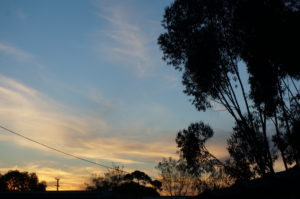
Sunrise at Cobar
Sunrise at Cobar
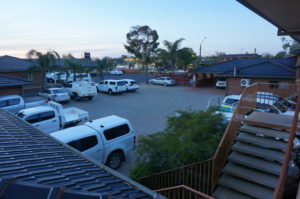
Mining vehicles at Cobar

Our time in Cobar was short. We wandered down town to a newsagent and the quilt shop.    In the evening we enjoyed a meal at Cobar Thai, so much nicer than our meal at the Bowls & Golf Club on our last visit.  Next morning I took a picture of the car park at the motel – full of mining Utes.


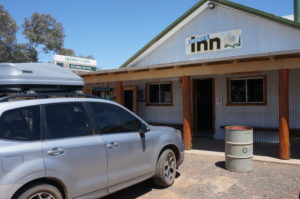
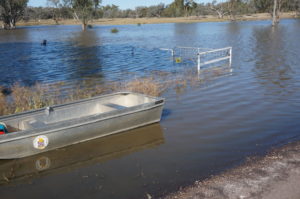
From Cobar we hit the dirt on our trip to Bourke via Louth.  This was once a bustling port on the Darling River.  Now there is little there except a few houses, a school with 3 students and the pub.  We visited the pub, had a drink and something to eat.  It backs onto the Darling and does quite a good tourist trade.

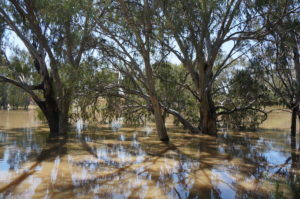
Darling at Louth - in flood
Darling at Louth – in flood
Shinny's Inn at Louth
Shinny’s Inn at Louth
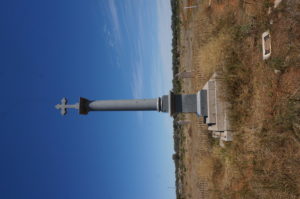
Cross in Louth cemetery

The story of the tombstone is about the founder of Louth, Thomas Mathews, who came to Australia to make his fortune at the goldfields leaving behind his wife and children.  Gold didn’t work out so he moved to the Darling and set up the pub at the port.  His wife then travelled out, had some more children and died in childbirth at 42 in 1869  Thomas then had the Celtic Cross built, sent out to Louth and placed on her grave in 1886.  The cross glows at sunset and on the date of her death, reflects onto the house she lived in.  It is officially a National Monument.

From Louth we drove to Bourke where the water was very close to the road in a couple of places but all was dry.  Back in Bourke, we shopped for dinner and visited an Art Gallery and made a purchase – a painting of wilflowers nearby.

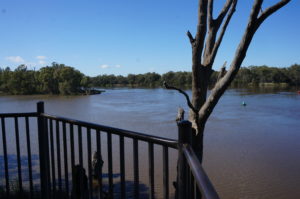
Water is higher than when we were last time
Sunrise
Sunrise
Sunrise from cabin
Sunrise from cabin

While we have been away, the Darling keeps rising.  We noticed a lot more water and there was lots of noise – insects, frogs, birds and mosquitoes.

We left Bourke early and now are at Goondiwindi.

Tomorrow we will be home.

Mildura – Broken Hill

We left Mildura on Friday morning, crossing the Murray and drove towards Broken Hill.  We stopped at Wentworth, about 30 kms from Mildura to see the confluence of the Darling and Murray.  The Darling is muddy and the Murray is supposed to be clear but it isn’t at the moment because of the flood waters.  It was about 10 degrees but was was blowing an icy wind.

Darling (left) and Murray Rivers meet
Perry Sandhills
Perry Sandhills


The God tree
The God tree
Perry Sandhills - our car in the background
Perry Sandhills – our car in the background


WW1
WWI


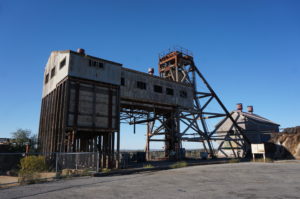
Junction Mine - now abandoned
Junction Mine – now abandoned
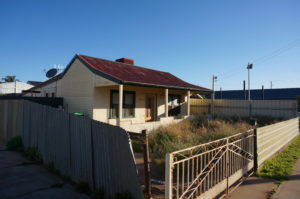
Miners Cottage
Miners Cottage

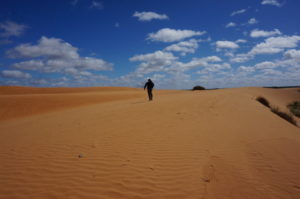
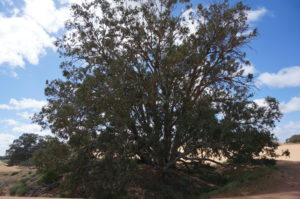
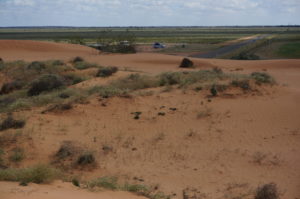
From there, we drove on a little further to see the Perry Sandhills.  These sandhills are just in the middle of ‘normal’ land.  They have similar origins to Mungo and have also found bones of early animals there too.  There is a large gum tree, named God, where the trunk is buried so you walk among the canopy.

From there we drove north pushed along by the wind, to Broken Hill.  The land was low (< 50m above sea level most of the way) with low scrubs.  We saw a few goats and a couple of emus.

We spent our day in Broken Hill visiting more art galleries and interesting sites.  But we started off the day at the local coffee shop,  The Silly Goat, where I had poached eggs on prosciutto and kale chips on a fried muffin and hollandaise sauce.  They are trendy in the silver city.

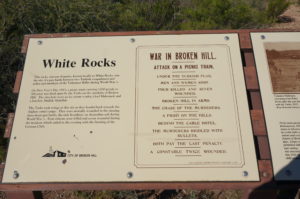
One of the galleries we visited was Jack Absolom’s.  He was there and he is a cranky old (89) bloke.  He reckons anyone can paint you just have to work at it.  We also visited a site where some Turks attacked a train full of picnickers on New Years Day.  Some people died.

Today, we drove east until we reached Cobar.

Swan Hill – Mildura

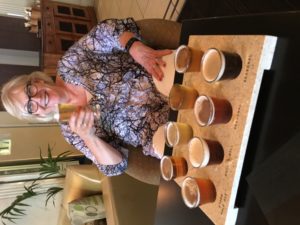
We drove along the Murray from Swan Hill to Mildura passing vineyards, orchards with citrus, olives,almonds and wheat.  Into Mildura, we decided on a motel near town so we could walk.  We found a mini brewery where the food is cooked by Stefano of A Gondola on the Murray coooking series.   So we went there for dinner.  I tried a rice ale and Craig had a tasting tray.  Then we ate snapper or pork belly.  The food was very delicious. And we particularly enjoyed the vegetables.

First Beer
First Beer
Yum
Yum


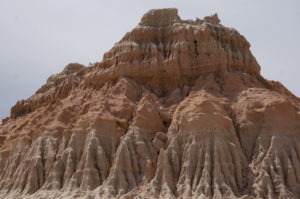
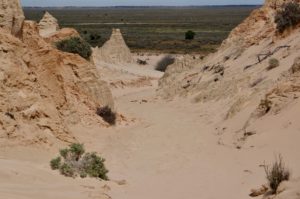
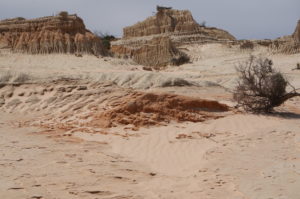
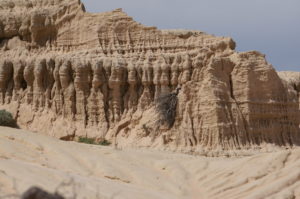
Today we went out to Mungo NP, the place where Mungo Man was found in 1974 which dated aborigines back to 40000 years.  It is a dried up lake bed but with a crescent edge known as the Wall of China, names by Chinese workers on the station as looking across the lake it looked like the Wall.  It is where the lake bed has blown up and across the edge of the lake.  Reminded me a bit of Bryce Canyon, Brendan.  Craig has taken lots of photos but here are a few of mine.

Mungo
Mungo
Mungo
Mungo


Mungo
Mungo
Mungo
Mungo

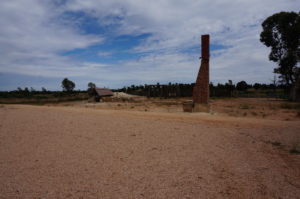
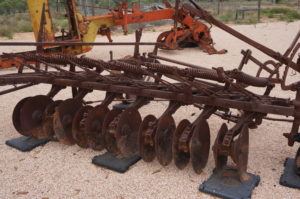
The NP was once a couple of sheep properties. The have kept one but knocked down the other.  But, for those who remember their school days, we saw a stump jump plow, invented in Australia to ploughing up the mallee trees.

Abandoned
Abandoned
Stump Jump Plough
Stump Jump Plough

Mt Gambier – Bendigo – Swan Hill

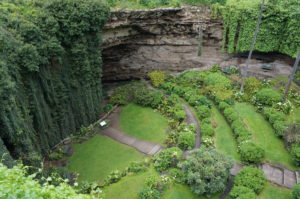
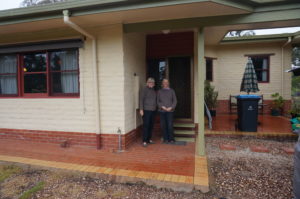
We left Mt Gambier to drive to Bendigo but not before checking out the lakes and sinkhole.  We then drove and drove across Victoria – Casterton, Colaraine, Hamilton, Dunkeld with stunning views of the Grampians, Ararat, Maryborough, Castlemaine and the Axe Creek! where Kathy and Ron live. We spent a lovely night catching up with them.  They built their own home with mud bricks made from their property.

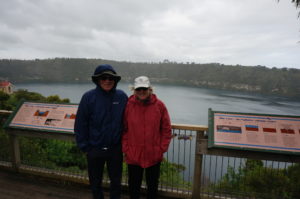
At Blue Lake, Mt Gambier
Sinkhole, Mt Gambier
Kathy and Anne
Kathy and Anne

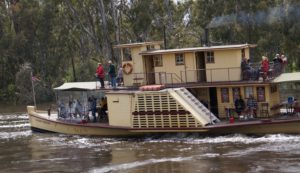
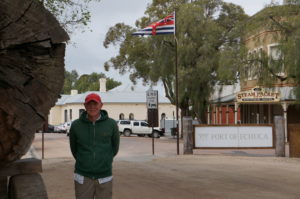
From Bendigo, we drove to Echhuca where we spent a couple of hours exploring.  The Murray is also very high at the moment and very full.  There are lots of good shops to investigate.


we then drove on from Echuca, across the flood plains, I suppose.  We had to stick to the highway as the scenic route along the river is flooded.  We arrived at Swan Hill and found a cabin in a riverside park, right beside the river.  It is a very beautiful spot.  We are so ending two nights here.

Echuca
Echuca
Craig at Echuca
Craig at Echuca


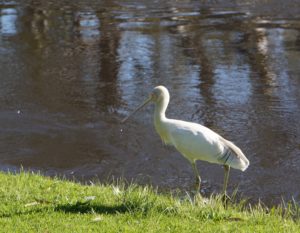
Spoonbill on Murray River
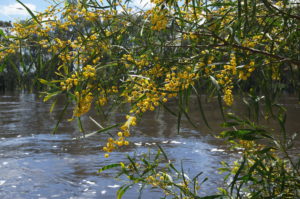
Wattle
Wattle